Most owners meet this subject as a small mystery. The well that filled the tanks briskly in November takes noticeably longer in April, nothing is broken, and the neighbour reports no change at all. The explanation is not a fault. Groundwater is a stock that the island deposits into and draws from on an annual rhythm, and a private well is a straw into that moving balance.
Where the seasonal movement comes from
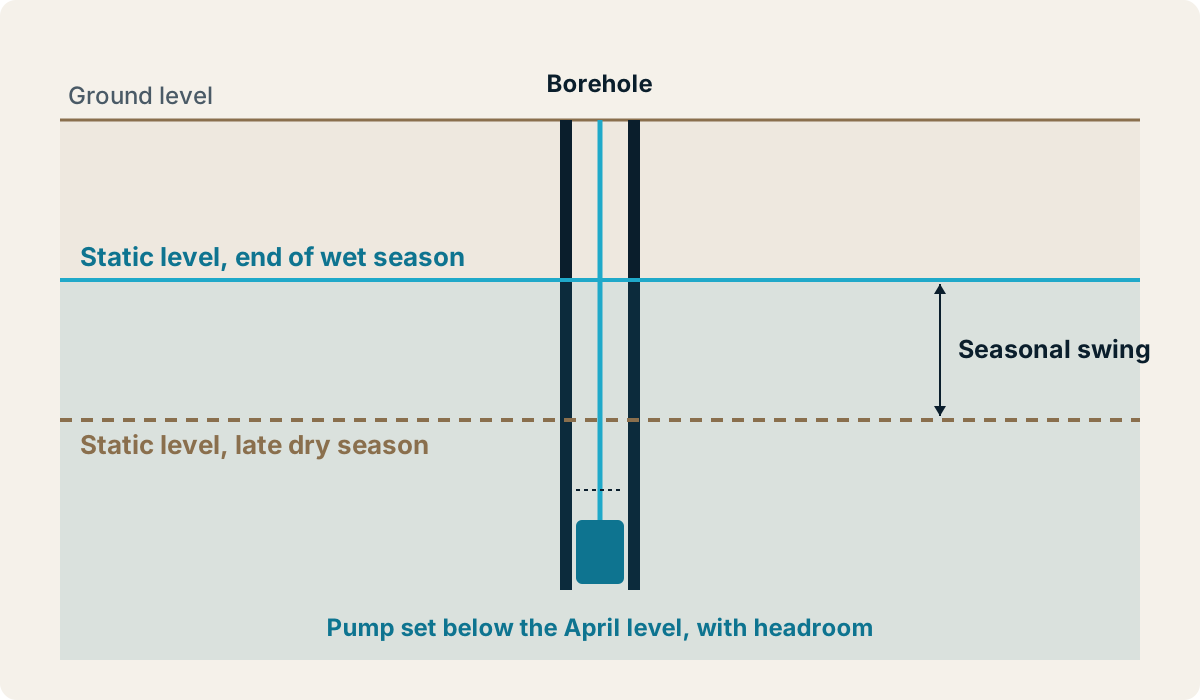
Rain does not become groundwater on the day it falls. It soaks downward slowly, and the water table at any moment reflects a running balance: recharge from the wet months on one side, natural drainage toward the sea plus everything being pumped on the other. Through the long rainless stretch the island spends its stored water and levels ease downward. When sustained rains return, recharge catches up with a lag of weeks rather than days, and levels recover. The result is a yearly curve, not a flat line.
Not every well feels the cycle equally. Shallow wells and bores in thin or fracture-fed zones ride the swing hardest, because their storage is small relative to the draw on it. Deeper bores sitting in better storage barely notice. Coastal wells add their own seasonal dimension, since a low dry-season water table is also when the salt boundary creeps closest.
What you will actually notice
- Tank refills take longer in the late dry season, because the pump works against a lower level
- A pump that sits close to the seasonal low may start cycling or drawing air in March and April
- Borderline wells behave perfectly for ten months and struggle only at the trough
- Recovery follows the first sustained weeks of rain, not the first afternoon storm
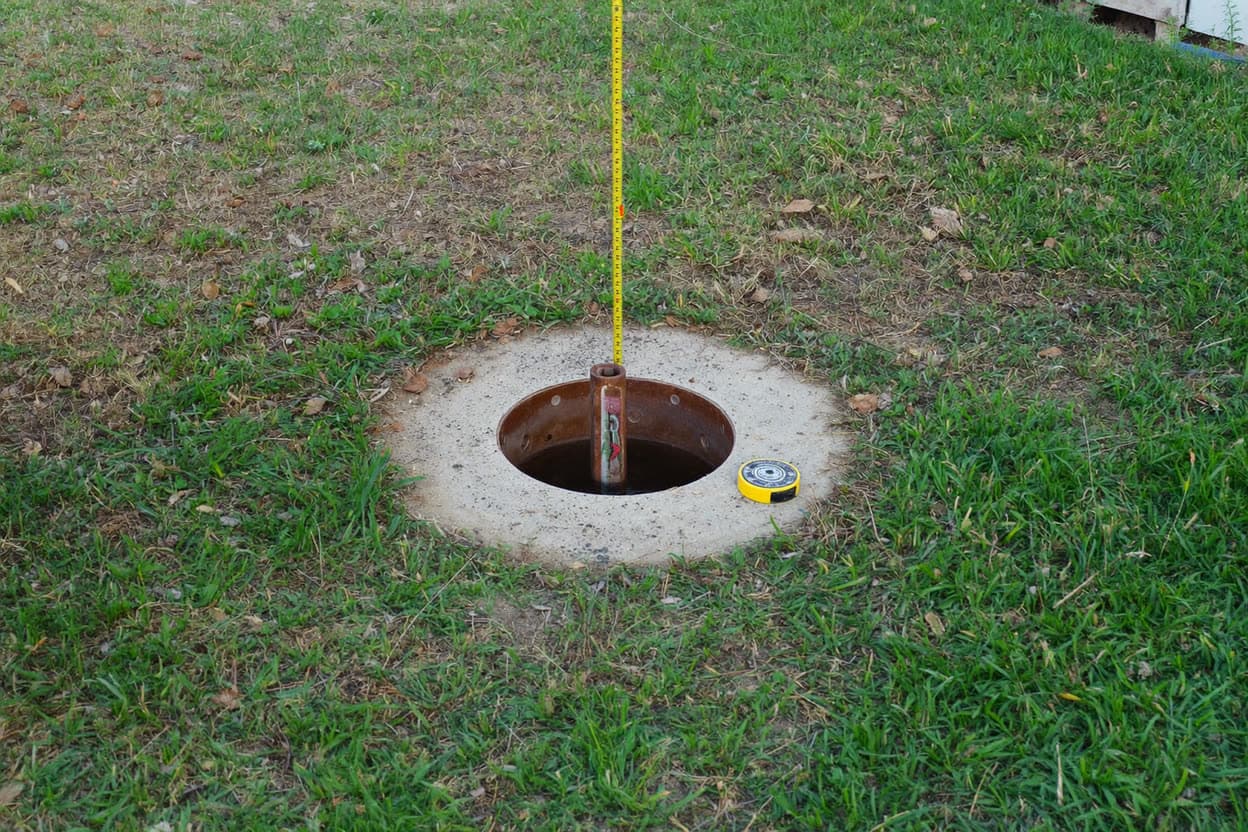
A measurement beats a memory every time this comes up. A water-level reading takes minutes with a dip meter, and two readings a year, one at the end of the wet season and one late in the dry, build the property's own curve within a couple of years. Those two numbers settle most versions of the is-it-fading-or-is-it-April argument before anyone spends money on it.
Design and timing decisions that respect the cycle
The cycle should shape several practical choices. A yield measured in October is the optimistic version of the well, so supply decisions that matter deserve late-dry-season data or a sensible margin on top of wet-season numbers. The pump is set with headroom below the expected April level, not the November one. Storage is sized for the months when the well is slowest and the garden is thirstiest, which are the same months. And irrigation plans are drawn against the trough, not the average.
The cycle is also the honest baseline for diagnosing decline. A seasonal dip recovers when the rains return. If each wet season brings the level back a little less than the year before, the pattern is pointing at something else: a clogging screen, mineral scale, or simply more neighbours drawing on the same ground than there were five years ago. That is a different conversation, and worth having early.
Deep Well Samui measures levels, test-pumps wells and plans systems around the island's seasonal reality across Samui, Phangan and Koh Tao. If your well feels different in April than it did at New Year, one measurement visit will tell you whether that is the season or the well.