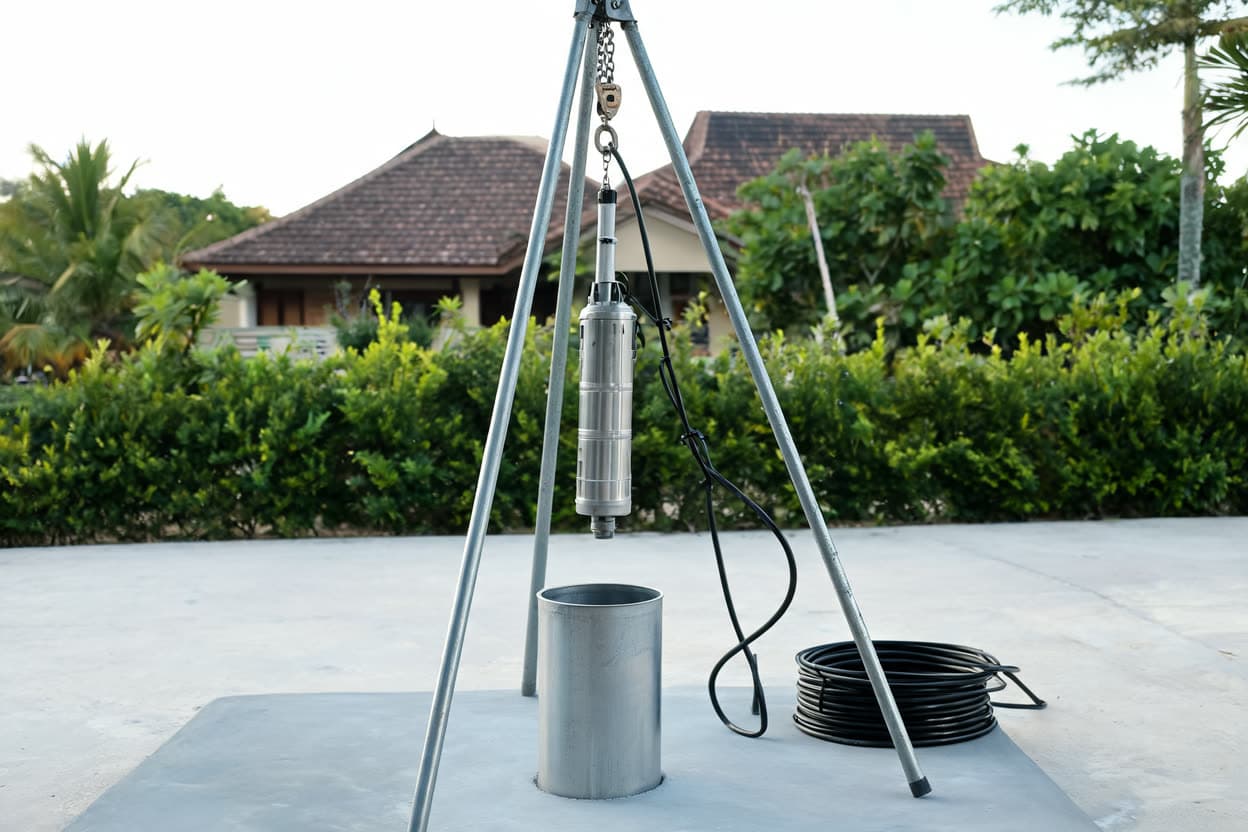
Ask how deep a pump should go and the common answer is near the bottom, to be safe. It sounds cautious and is often wrong. The depth at which a submersible pump hangs affects whether it ever runs dry, how much energy it uses, how much sediment it draws in and how easy it is to service. Getting it right is not a matter of preference. It comes from a handful of measurements that every properly completed well should already have.
The three levels that matter
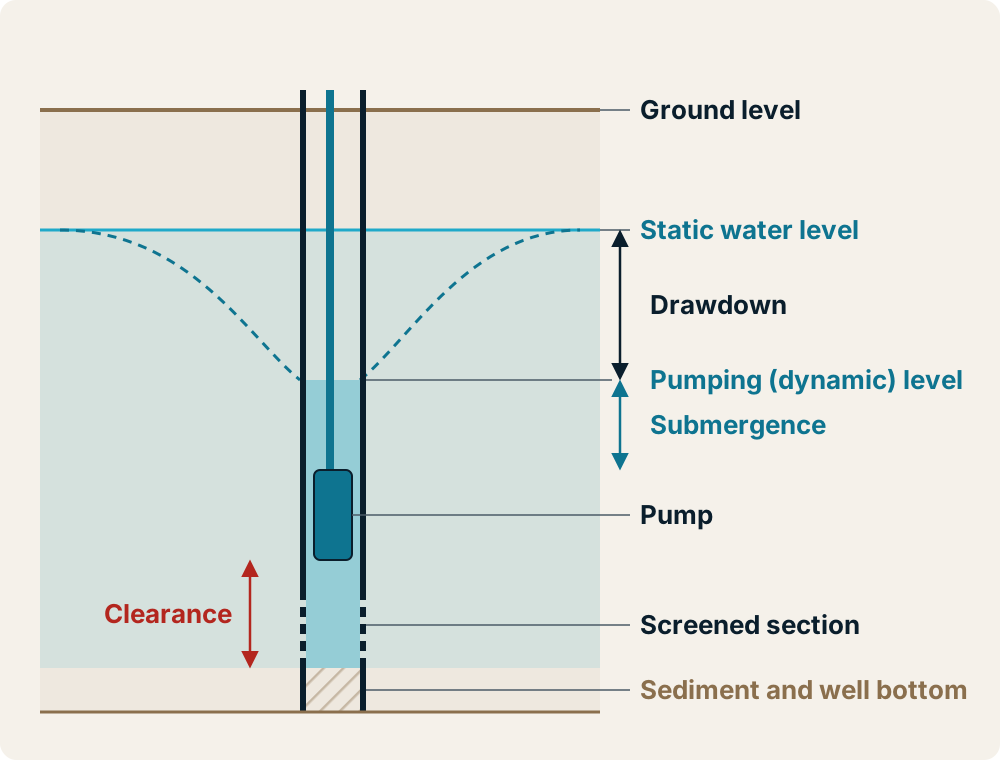
The static water level is where the water stands in the well when nothing has been pumped for a while. The dynamic, or pumping, water level is where it settles while the pump is running, because water flows into the well more slowly than the pump removes it. The distance between the two is the drawdown. A strong well in good ground may draw down only a little; a modest well pumped hard may draw down a long way.
These levels are not guesses. They are measured during test pumping, when the well is pumped at a known rate and the water level is recorded until it stabilises, and then again while it recovers. That report is the starting point for setting the pump. Without it, any installation depth is an estimate.
Set too high: the pump can run out of water
The pump intake must stay underwater whenever the pump runs, with some depth of water above it, called submergence, to spare. A pump set just below the static level can work perfectly in the first minutes of every run and then lose submergence as the level falls toward the pumping level. Once the intake draws air the pump runs dry, and a submersible motor that is cooled by the water flowing past it overheats quickly without that flow.
Seasonal change makes this worse. On the islands the water table is usually lower by the end of the dry season, so a depth that looks comfortable in November may leave no margin in April. The pumping level used for the design should be the lowest one the well is realistically expected to reach, not the one measured on a good day.
Set too low: deeper is not safer
Hanging the pump close to the bottom solves the dry-running worry and creates other problems. The bottom of a well collects sediment, and a pump sitting in or near it draws sand and fines into the impellers, wearing them and clouding the water. Every extra metre of depth adds riser pipe and cable, adds weight to lift during servicing, and in many wells puts the pump in a position the well was not designed for, such as alongside or below the screened section where water enters.
Depth below the pumping level adds very little to the lifting work, because the water already stands up to that level in the casing; the extra length of riser only adds a small amount of pipe friction. What a deep setting does add is cost, sediment exposure and service difficulty, for no benefit once the pump already has enough submergence.
How the right depth is worked out
In practice the depth is found by working down and up at the same time. From the top, it starts at the lowest expected pumping level, then adds the submergence the pump needs plus a margin for seasonal and long-term change. From the bottom, it keeps clear of the sediment zone and respects the well's construction, the casing depth and where the screen sits. The pump goes in the band between those two limits. If the band is very narrow or does not exist, that is information too: the well may need a lower pumping rate, more storage, or a different pump.
The rest of the design follows from that position. The pump is chosen to deliver the required flow against the total head measured from the pumping level, the cable is sized for the length of run so the motor is not starved by voltage drop, and a dry-run protection device stops the pump if the level ever falls further than expected. No fixed number of metres can replace that calculation, because no two wells have the same levels.
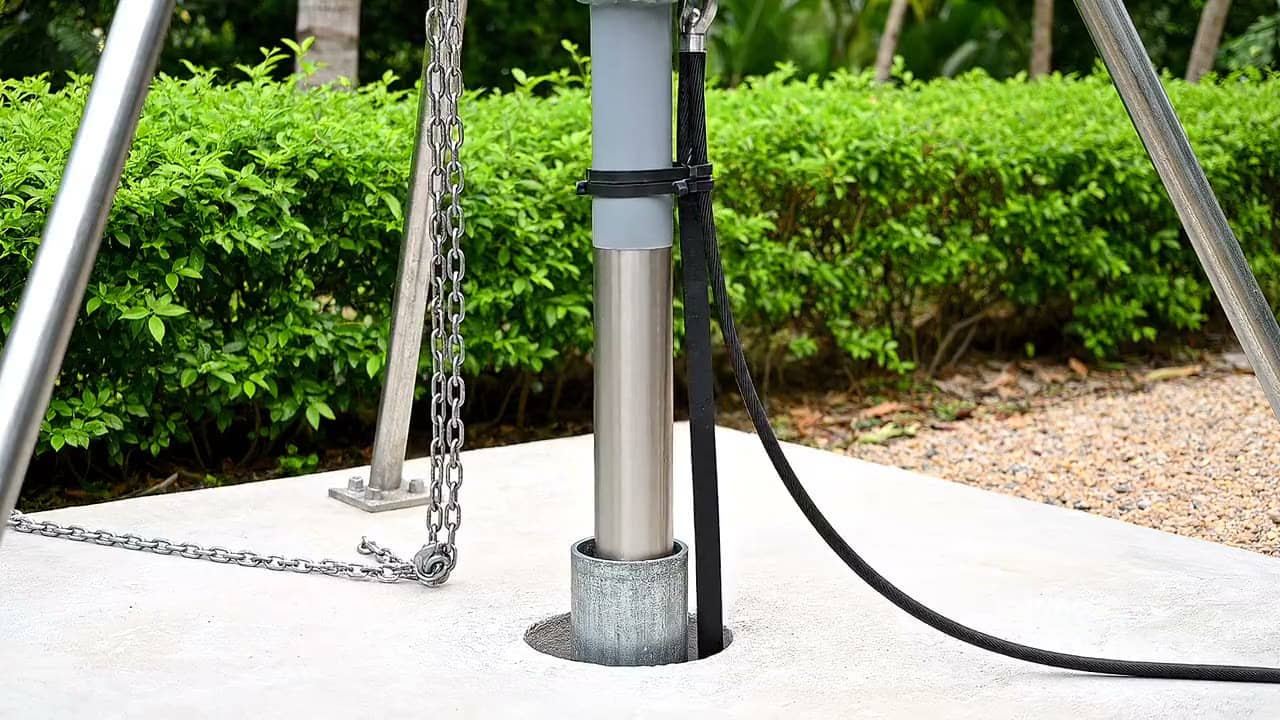
Deep Well Samui sets and resets submersible pumps across Samui, Phangan and Koh Tao from measured water levels, including test pumping where an older well has no records. If a pump runs dry in April or keeps wearing out early, its setting depth is one of the first things we check.