Sooner or later every small development on the islands asks the same question. Three or four villas are going up on one piece of land, each needs reliable water, and the budget meeting produces two camps: drill one strong well and share it, or give every villa its own bore. Both models are built here, both can work well, and the purchase price alone is a poor way to choose between them.
The decision actually splits into three separate questions. What does the ground allow? Who will run the system for the next twenty years? And what happens to the arrangement when the villas are sold to different owners? Projects that answer all three early tend to be the ones that never think about water again.
What the ground allows comes first
Wells drilled close together are not independent. Every pumping bore lowers the water level around itself, and where two bores draw on the same fracture system they share one water budget rather than owning one each. Drill four wells on a plot that can really feed two and the result is four mediocre supplies instead of two good ones. The land votes first, and it votes through the survey and through what the first completed bore shows under test pumping.
This is why the shared-or-separate decision is best made after the first well exists, not on the masterplan. The practical sequence: survey the whole plot, drill the strongest position first, test it properly, and then decide whether the result carries every villa or whether a second bore in a second position earns its place. Committing to a well count before anyone has drilled is guessing with heavy equipment.
One well: efficient, with a single point of failure
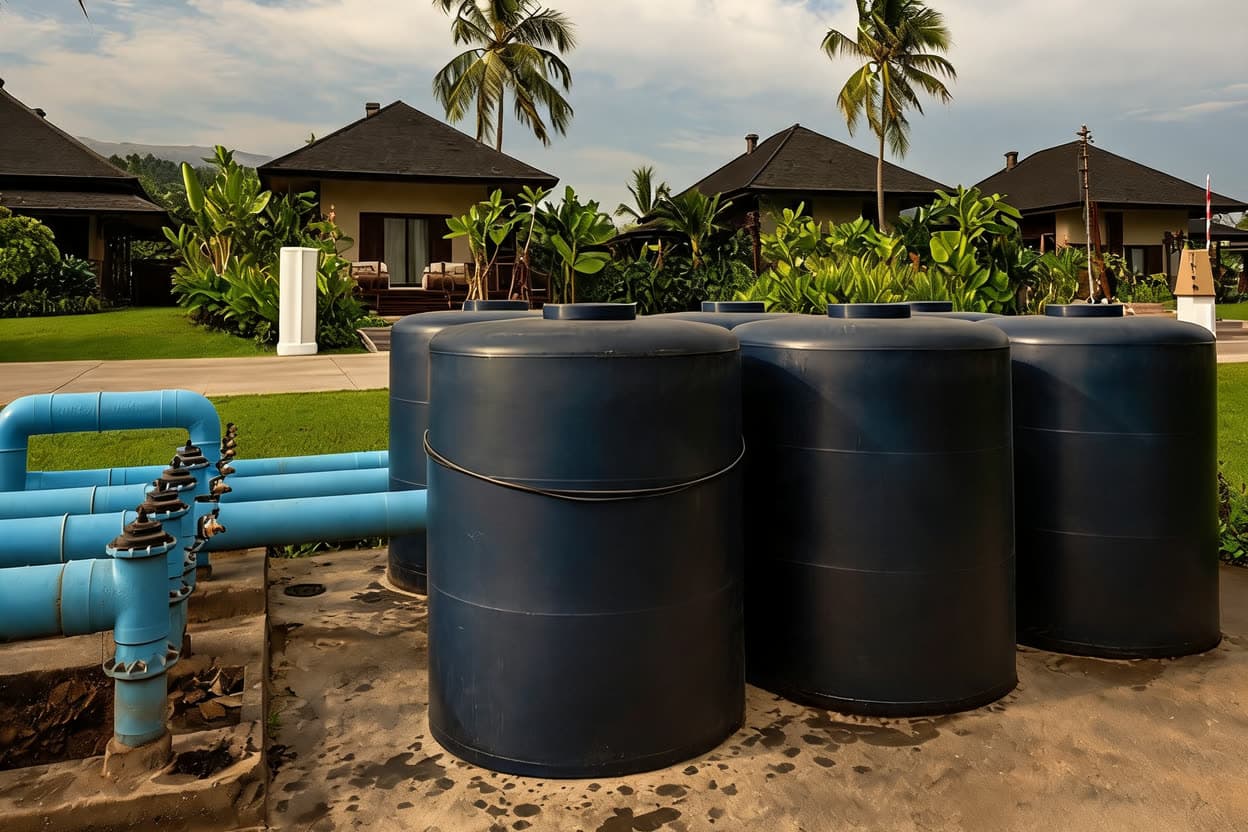
The shared model concentrates everything. One bore in the best hydrogeological position on the plot, one properly sized pump, one storage bank, one treatment line, one permit file, and a per-villa cost that is usually well below the separate alternative. The weaknesses are mirror images of the strengths: when the shared pump stops, everyone's tap stops, so the design owes the cluster generous storage and a thought-through backup. And a shared asset needs governance, which is a word developers like less than drilling.
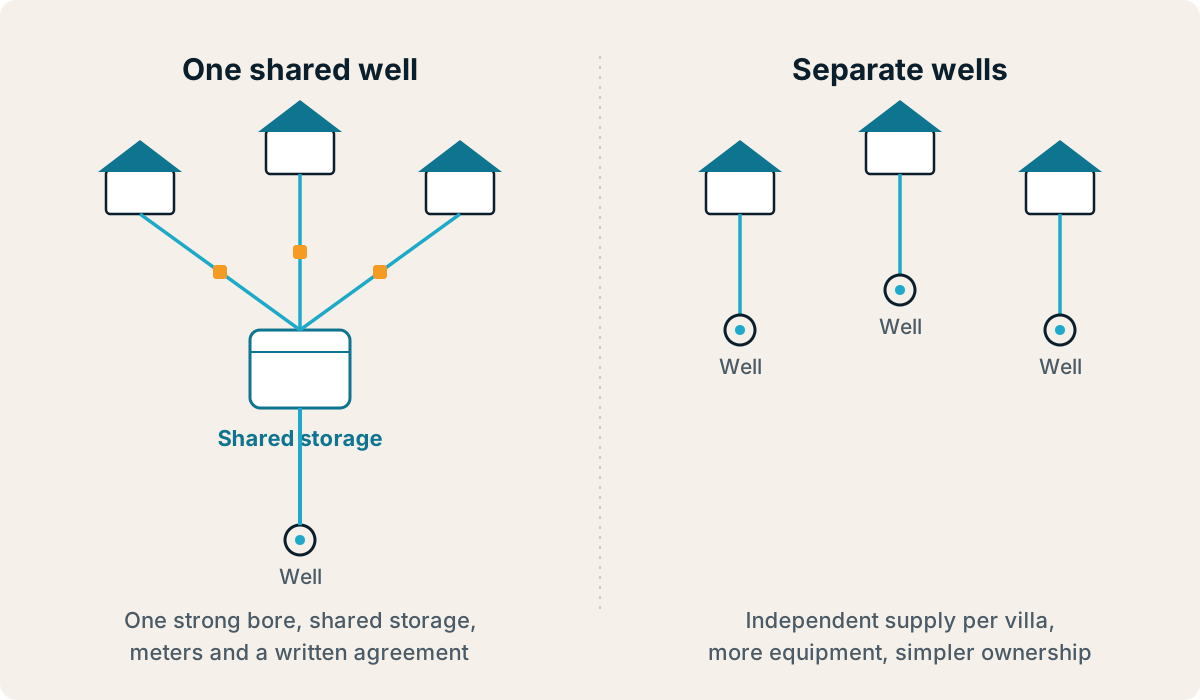
Separate wells invert the trade. Each villa stands alone: no sharing agreement, no meters between neighbours, nothing to negotiate at resale. The costs multiply almost linearly, later bores often get second-best positions, and the development ends up maintaining several pumps, several sets of controls and several files instead of one. On generous land with well-spaced plots, that independence can still be worth every baht of it.
The ownership question outlives the construction
A shared well is easy to run while one developer owns everything. The test comes when the villas sell separately, because the bore, the pumps and the tanks have to legally live somewhere: a common-area entity, a written cost-sharing arrangement, per-villa water meters, and access rights to the wellhead for whoever services it. Developments that skip this paperwork discover the gap at the first large repair invoice, when four owners meet a bill with no formula attached to it.
- Who owns the bore, the pumps and the storage, as a named entity rather than a handshake
- How running costs split, with per-villa meters doing the arguing instead of people
- Who schedules maintenance and holds the well's documents
- What happens when one villa's usage grows far beyond the others
The failure maths, honestly
Redundancy is where the models genuinely differ. A single shared well with generous storage and a standing delivery fallback is more resilient than its single-bore reputation suggests, because storage turns most failures into a scheduling problem rather than a dry tap. Separate wells only back each other up if someone had the foresight to cross-connect the plumbing, which rarely happens. There is also a blend worth knowing: a shared primary well, plus one villa's independent bore kept as the cluster's emergency source. For two or three clustered villas the shared model usually wins; for spread-out plots, phased construction or uneasy future neighbours, separate bores earn their premium.
Deep Well Samui surveys development plots, drills and test-pumps the first bore, and builds both models across Samui, Phangan and Koh Tao, including the metering and storage that make a shared system liveable. If your project is at the how-many-wells stage, that is exactly the right time to talk.