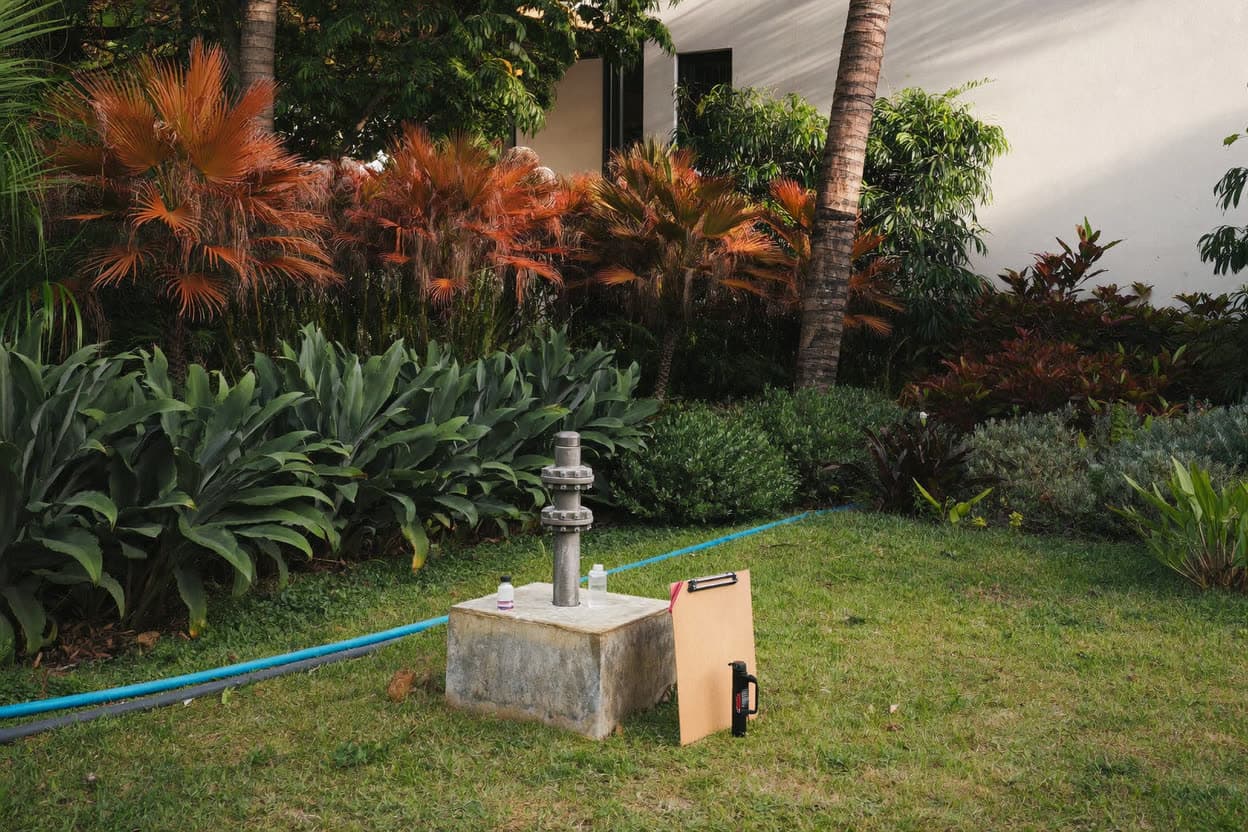
Private deep well appears in villa listings the way sea view does, as a feature that needs no explanation. It deserves one. A good well genuinely is one of the most valuable pieces of equipment on an island property, because it removes a monthly dependency the neighbours still carry. But unlike the roof or the pool, a well cannot be judged by looking at it, and the gap between a proven well and a rumoured one is the gap between an asset and a liability without a price cap.
The paperwork a well should have
- A drilling completion report: depth, casing diameter and material, and where the screen sits
- A test pumping report, with the measured yield and the water levels it was measured at
- A groundwater use licence, where the well's size and use require one
- The pump's model, installation depth and age, ideally with the invoice
- Any service history: what was done, when, and by whom
Together these documents do two jobs. They prove the well was built as a water supply rather than improvised, and they give every future technician the baseline that makes repairs cheaper. The licence matters most at transfer: a well that needed one and never got it becomes the buyer's problem the day after completion, not the seller's.
The checks worth commissioning before transfer
Paper describes the well as built. A pre-purchase inspection describes it as it is now. In half a day on site, a technician can spot-check the yield against the old test report by pumping and watching the water level respond, take a sample for a laboratory water test, check the pump electrically, and inspect tanks, pressure equipment and filtration for age and condition. If the visit can be scheduled in the dry season, better still: a well that performs in April performs.
The order matters as much as the list. Yield first, because it is the one property of a well that money struggles to fix. Water quality second, because treatment can handle most of what a lab finds, at a price that belongs in the negotiation. Equipment last, because pumps and tanks are replaceable line items with known costs.
Red flags that are worth money
- A stack of water delivery receipts from the last two high seasons
- A nearly new pump one size larger than the paperwork says the well needs, which often means someone was chasing a fading yield
- Orange staining in toilets and showers that the furniture arrangement works hard to hide
- A storage tank far larger than the household, quietly doing what the well no longer can
- The phrase: the well is fine, we just never use it
None of these ends a purchase by itself. What each one ends is the assumption that the well is fine, moving its condition out of the listing romance and into the numbers, where a tired pump is a modest line item and a saline or collapsing bore is a very different conversation.
After the purchase
If the well passes, start its file in the first week of ownership: the lab result, the measured yield, a photo of the wellhead and the pump details, all in one folder. That baseline turns every future fault into a comparison instead of a mystery. It is also exactly the file you will hand to the next buyer one day, with the roles reversed.
Deep Well Samui runs pre-purchase well inspections across Samui, Phangan and Koh Tao: documents reviewed, yield spot-checked, water tested, and the findings written up in plain language a negotiation can use. If a listing says private deep well, one visit tells you what those words are worth.