Every delivery-dependent owner runs this calculation eventually, usually in April, usually while waiting for a truck that is later than promised. Would a well have paid for itself by now? The honest comparison is not one number against another, because drilling costs vary by site and delivery costs vary by usage. It is a comparison of two cost structures, and the structures behave very differently over ten years.
Two cost shapes
Trucked water is a pure operating cost. Every cubic metre arrives with a price on it, forever, and the price firms up exactly when scarcity does. A well is the opposite shape: one capital project up front, then running costs, electricity, periodic servicing, an eventual pump replacement, that stay modest and mostly independent of how much water flows. A lightly used weekend home barely tests the difference. A property with a garden, a pool and guests pushes volume through the meter every day, and volume is what drives the two structures apart.
Capacity behaves differently too. A truck delivers what the schedule allows, and in high season the schedule is the constraint: the driest weeks are when every property on the island wants the same trucks. A well delivers its yield around the clock without asking anyone. For rental properties, that difference lands directly on the guest experience in the exact weeks the calendar is full.
What the well asks in return
The well side of the ledger is not free money, and pretending otherwise is how owners end up disappointed:
- An upfront drilling project with real geological uncertainty, which a survey narrows but cannot remove
- A permit file, where the well's size and use require one
- Electricity and scheduled servicing as genuine running costs
- Water quality that must be tested, and sometimes treated before the house should drink it
- A pump that will eventually fail, on its own schedule rather than yours
And some properties genuinely should not drill. Plots in poor or salinity-prone ground, households using very little water, owners with a short horizon on the property, and sites where access makes the drilling project disproportionate are all better served by deliveries, a modest storage upgrade, or both. A good contractor says so at the survey stage rather than after the invoice.
The hybrid most properties actually run
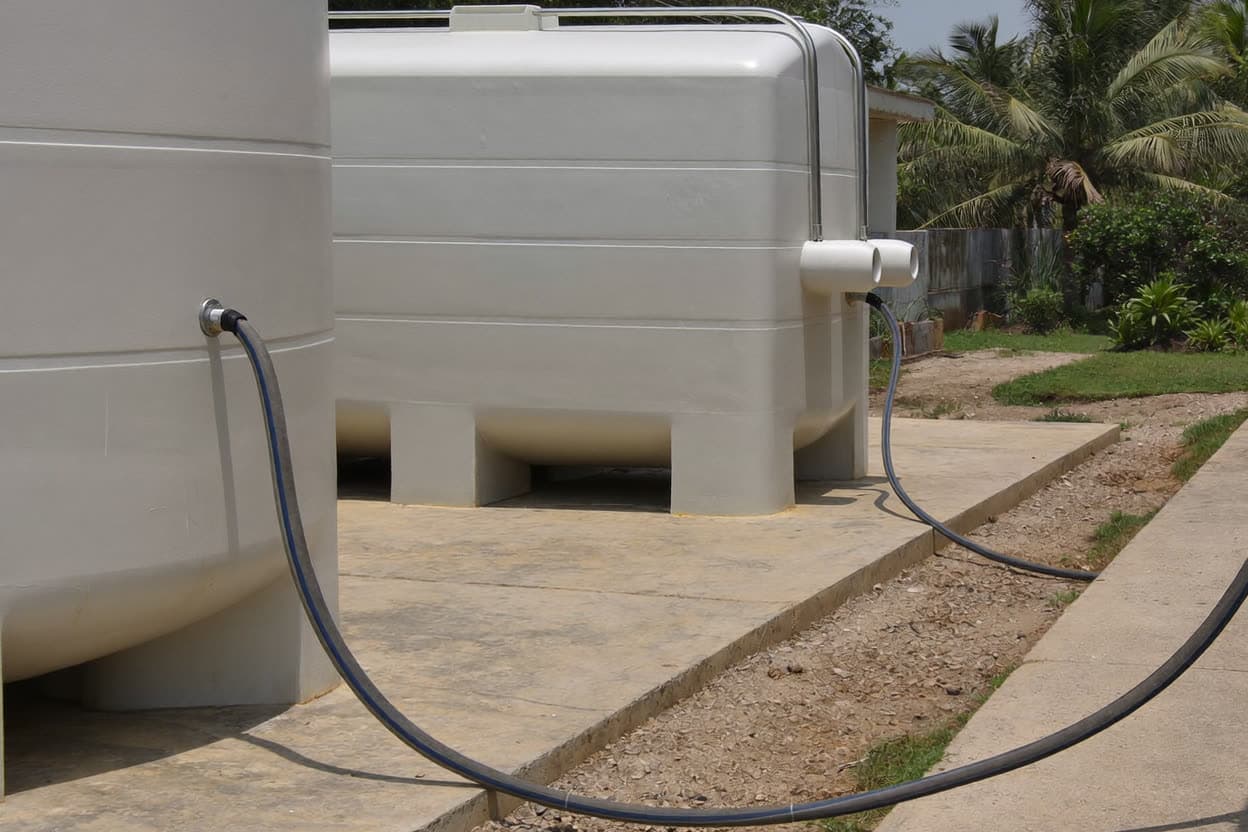
In practice the choice is rarely either-or. The setup that keeps working on the islands is a well as the primary source with a standing delivery arrangement held as the dry-season and breakdown fallback, and storage in the middle that accepts water from either side without caring where it came from. The well carries the volume and the economics; the trucks carry the bad week. Rental villas and small resorts value that redundancy as a product feature, not just an insurance policy.
Deep Well Samui runs both sides of this comparison, drilling wells and operating scheduled water delivery across Samui, Phangan and Koh Tao, so the recommendation is not a sales pitch for either answer. A site survey prices the well side of your ledger; your delivery history already prices the other.