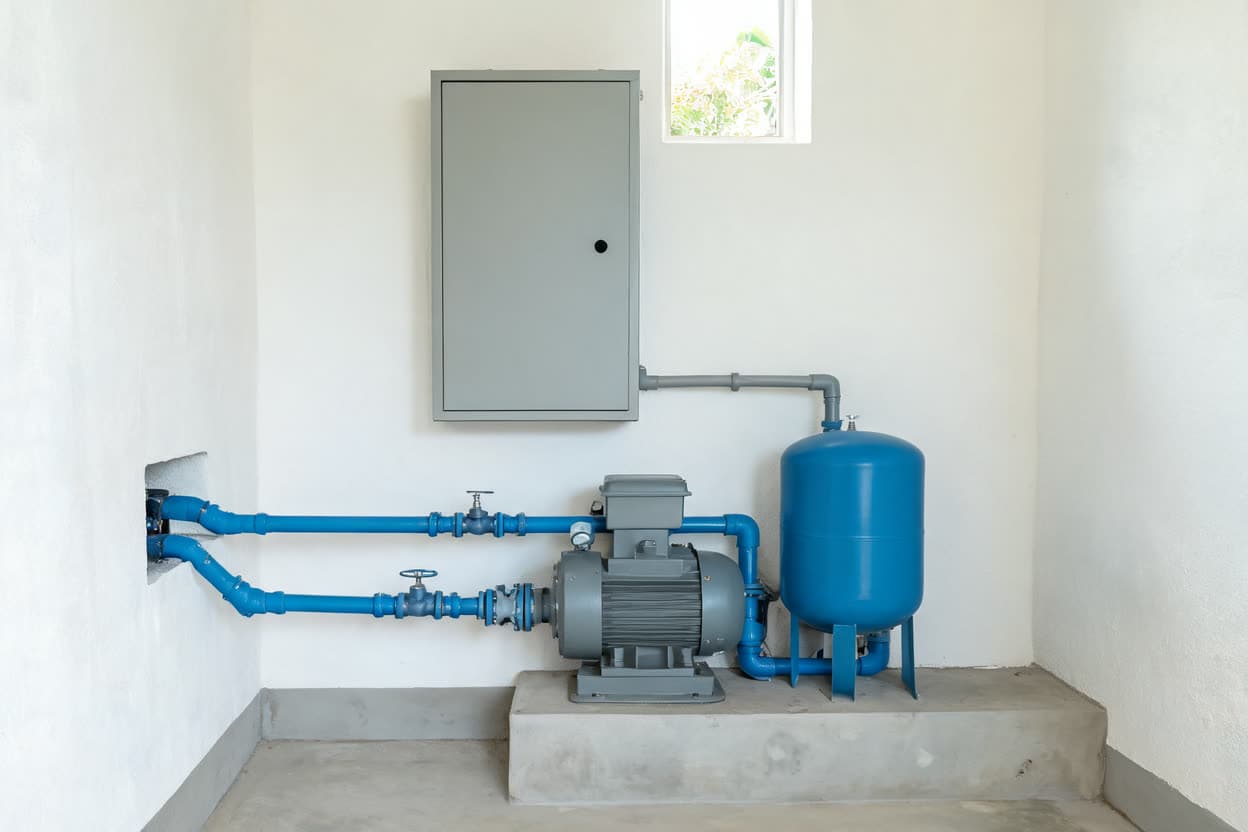
Owners usually notice a pump's running cost in one of two ways: a power bill that seems high for the size of the house, or a quote for a bigger pump that makes them wonder what it will cost to run. Both questions have the same answer, and it is simpler than most people expect. A pump consumes energy at a certain rate while it runs, and it runs for a certain number of hours. Multiply the two and you have its consumption.
The one relationship that matters
Electrical energy is measured in kilowatt-hours. A pump drawing 1 kW for one hour uses 1 kWh. So the basic estimate is the power the pump actually draws while running, multiplied by the hours it runs in a day or a month. The cost then follows from your own electricity tariff: kWh multiplied by the price per kWh on your bill. Because tariffs vary by supplier, meter type and property, no figure is assumed here.
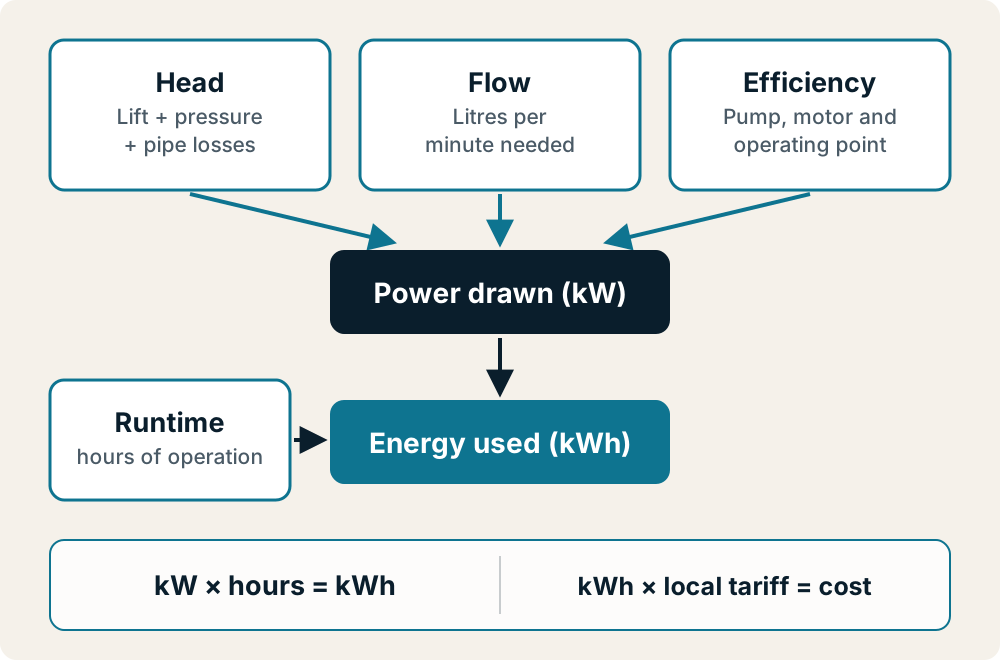
A note on the power figure: the number on the nameplate is the motor's rated output, not necessarily what it draws in your installation. A motor's actual draw depends on how hard the pump is working at its operating point, so the best figure for an estimate is a measured one, taken by a technician with the pump running normally.
What sets the power a pump draws
The work a pump does is lifting a volume of water through a height and pushing it against pressure. Three things set how much power that takes. The head: the vertical lift from the pumping level in the well to the tank or house, plus the pressure the system needs, plus losses in pipes and fittings. The flow: how many litres per minute it is moving. And the efficiency: how much of the electrical power drawn ends up as useful work on the water, which depends on the pump, the motor and how close to its best operating point the pump runs.
Each of these can quietly increase. A filter that is clogging adds resistance, so the pump works against more head for the same water. A pump that is badly matched to the well runs far from its efficient point. A well whose level has dropped makes the pump lift water further. None of these show on the bill as a fault; they show as a slowly rising number.
Why runtime matters as much as motor size
A larger motor does not automatically mean a proportionally larger bill. Consider two illustrative pumps supplying the same daily volume of water to the same tank. Pump A draws 1.5 kW and fills the demand in 2 hours: 1.5 × 2 = 3 kWh a day. Pump B draws 0.75 kW but, delivering half the flow, needs 4 hours: 0.75 × 4 = 3 kWh. In this simplified case the energy is the same, because the same water is lifted the same height and both pumps are assumed to be similarly efficient. These numbers are for illustration only; real values depend on the well, the pumps and the pipework.
Where the two differ in practice is efficiency and starts. A pump that is oversized for the well or the system often runs away from its best operating point, wasting a share of every kWh, and an oversized pump feeding a small pressure tank starts and stops far more often. Each start draws a surge of current and wears the motor. So the cheapest pump to run is usually the one matched to the duty, not the smallest or the largest.
How storage changes the picture
Many island villas use two pumps: a submersible that lifts water from the well into storage, and a booster that pressurises the house from the tank. The two use energy differently. The well pump runs long, steady cycles to refill the tank, which suits its efficiency, while the booster runs whenever someone opens a tap. A well-sized pressure vessel or a variable-speed drive on the booster cuts its starts and its wasted energy. Adequate storage also lets the well pump work at a calm, efficient rate instead of chasing the house's peaks.
Estimating your own pump
To estimate consumption for your property, you need the pump's measured running power and a realistic figure for its daily runtime, which a simple hour meter on the pump circuit records accurately. Multiply them for daily kWh, multiply by the days in your billing period, and apply your tariff. If the result looks high, the likely causes are worth checking in order: a pump far from its efficient point, frequent starts, rising head from clogged filters or pipes, and leaks that keep the pump running.
Deep Well Samui checks pump performance, matches pumps to wells and sets up storage and pressure systems that run efficiently across Samui, Phangan and Koh Tao. If your pump's running hours or power use look wrong, a system check will find out why.