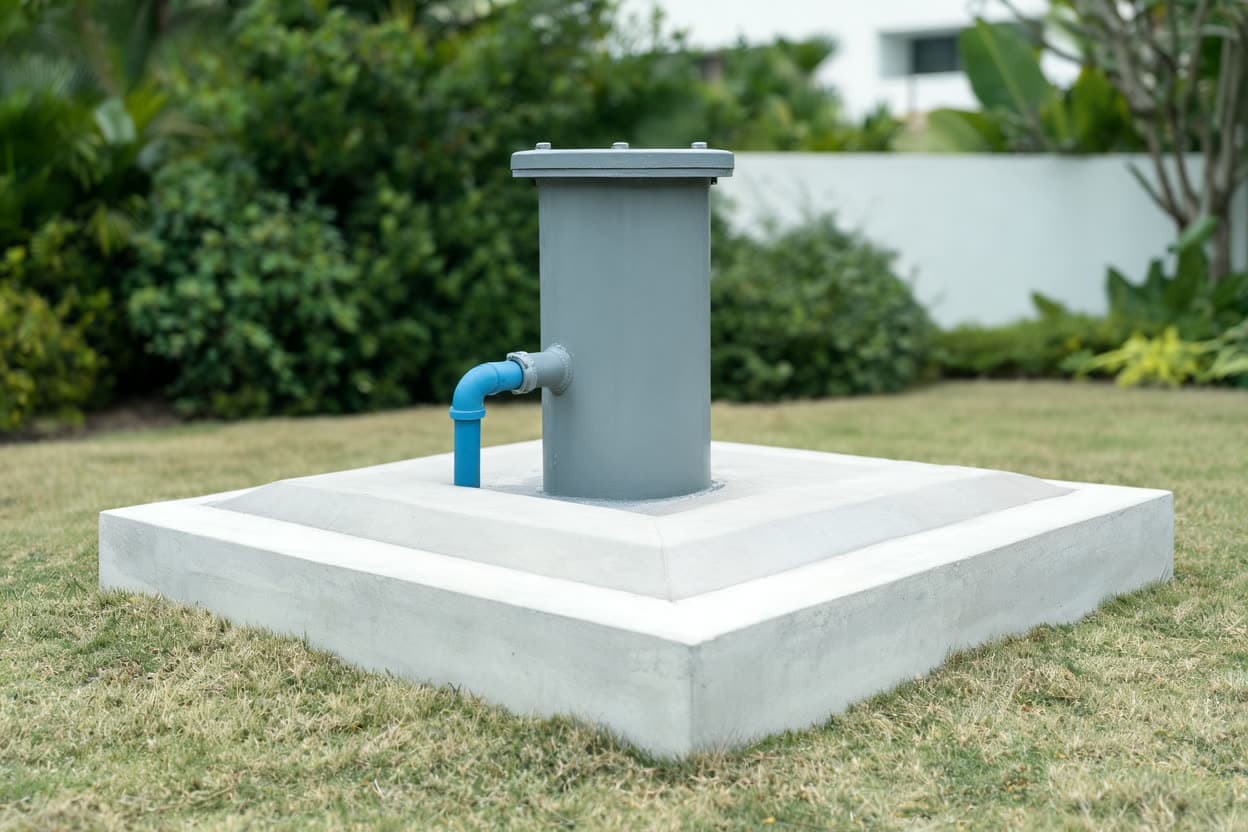
A deep well has a natural advantage that owners rarely think about. Water that has filtered down through metres of soil and rock arrives at the aquifer far cleaner than the rain that fell on the garden. The borehole, though, is a hole straight through all of that protection. If the top of it is not sealed properly, surface water can skip the long journey and drop directly into the supply.
That distinction matters when something goes wrong with the water. Some problems really do originate underground: iron, manganese, hardness or salinity are properties of the groundwater itself, and they are dealt with by testing and treatment. Contamination that enters from the surface is a different kind of problem. It is a construction and maintenance issue, and treating the water does not fix the hole it is coming through.
How surface water finds its way into a well
Surface contamination needs a route, and in practice the routes are few and predictable:
- A casing cut off at or below ground level, so the top of the well sits in a low point
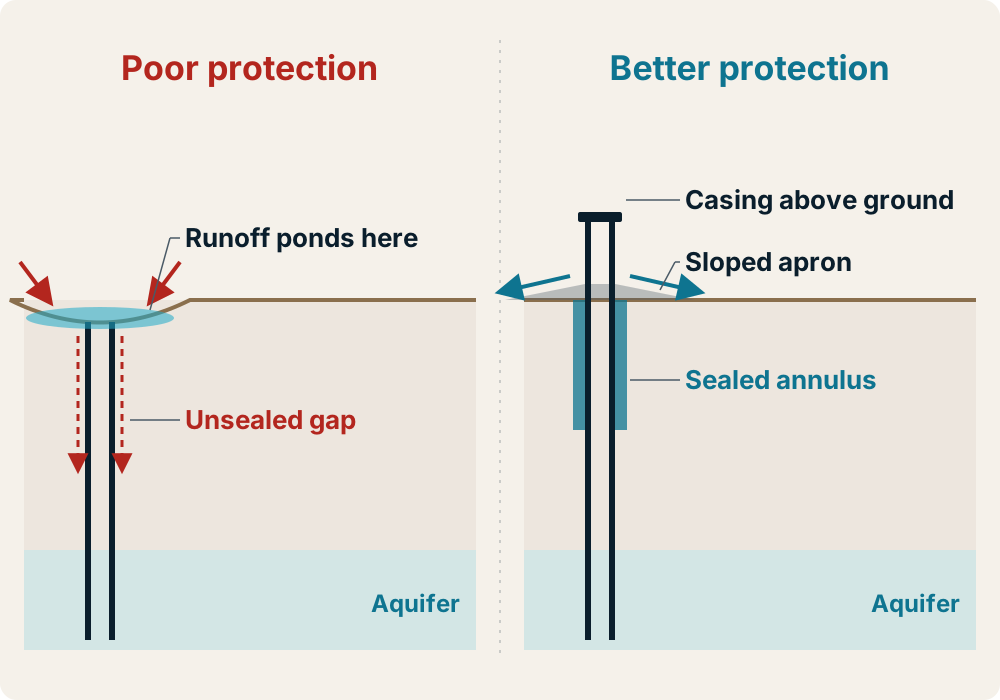
- Rain and runoff that pond around the casing instead of draining away from it
- An unsealed gap between the casing and the drilled hole, which lets water track down the outside of the pipe
- Cable and pipe penetrations through the cap left open, or sealed with tape that has long since perished
- A damaged or corroded casing below ground that admits shallow water through the wall
- A loose or missing cap that lets in insects, leaves, small animals and construction dust
- Drainage, gutter outlets or a wash-down area pointed toward the wellhead
On the islands, heavy tropical downpours make the ponding route the most common one. A wellhead that sits in a slight dip in the lawn can spend several hours a year under a puddle of whatever the garden, the driveway and the neighbour's drain have washed toward it. Flooding is the extreme version of the same thing.
What a properly protected wellhead looks like
None of the protective details are expensive, and all of them are easiest to get right while the well is being completed. The casing finishes above the surrounding ground rather than flush with it, so a puddle cannot reach the top of the well. The space between the casing and the drilled hole is sealed with grout over its upper section, which closes the path down the outside of the pipe. That sanitary seal is invisible once the work is finished, which is exactly why it is worth asking about on any quotation.
Around the casing, a small concrete apron sloped outward sends rain away from the well instead of collecting it. The cap is a proper fitted closure, and every cable and pipe that passes through it uses a sealed fitting. Finally, the wellhead stays accessible. A well buried under decking, paving or a planter cannot be inspected, and a seal nobody can see is a seal nobody checks.
Existing wells: what to check
Many island wells were finished quickly, and later landscaping often makes things worse by raising the garden around the casing. An owner can check most of the risk factors in ten minutes: whether the casing top is above the surrounding ground, whether water stands around it after rain, whether the cap fits and the penetrations are sealed, and whether anything drains toward it. Where the answers are wrong, the fixes are usually modest: extending the casing, pouring an apron, resealing fittings or redirecting a drain.
Contamination also arrives during maintenance. A pump pulled out and laid on the soil, tools rinsed over the open casing or a cap left off overnight all introduce exactly the surface material the well was built to keep out. Clean handling and a short disinfection after significant work are part of doing the job properly.
When to test the water
Looking at a wellhead tells you about risk. Only a water test tells you about the water. A test is worth arranging after flooding around the well, after major work such as a pump replacement or rehabilitation, after a long period of disuse, when the smell or taste changes, or whenever surface contamination is suspected. If the result shows a problem, fixing the wellhead comes before treating the water, otherwise the treatment is fighting a supply that keeps getting re-contaminated.
Timing is a useful clue when deciding which kind of problem you have. Water that turns cloudy, smells different or tests worse after heavy rain, then recovers in dry weather, points toward surface water getting in. A problem that stays the same whatever the weather is more likely to be a property of the groundwater itself. The test result decides, but the pattern tells you where to look first.
Deep Well Samui inspects and upgrades wellheads across Samui, Phangan and Koh Tao: raising casings, pouring aprons, resealing penetrations and arranging water tests after flooding or major work. If your wellhead sits in a dip or you are not sure how it was sealed, one inspection visit settles it.