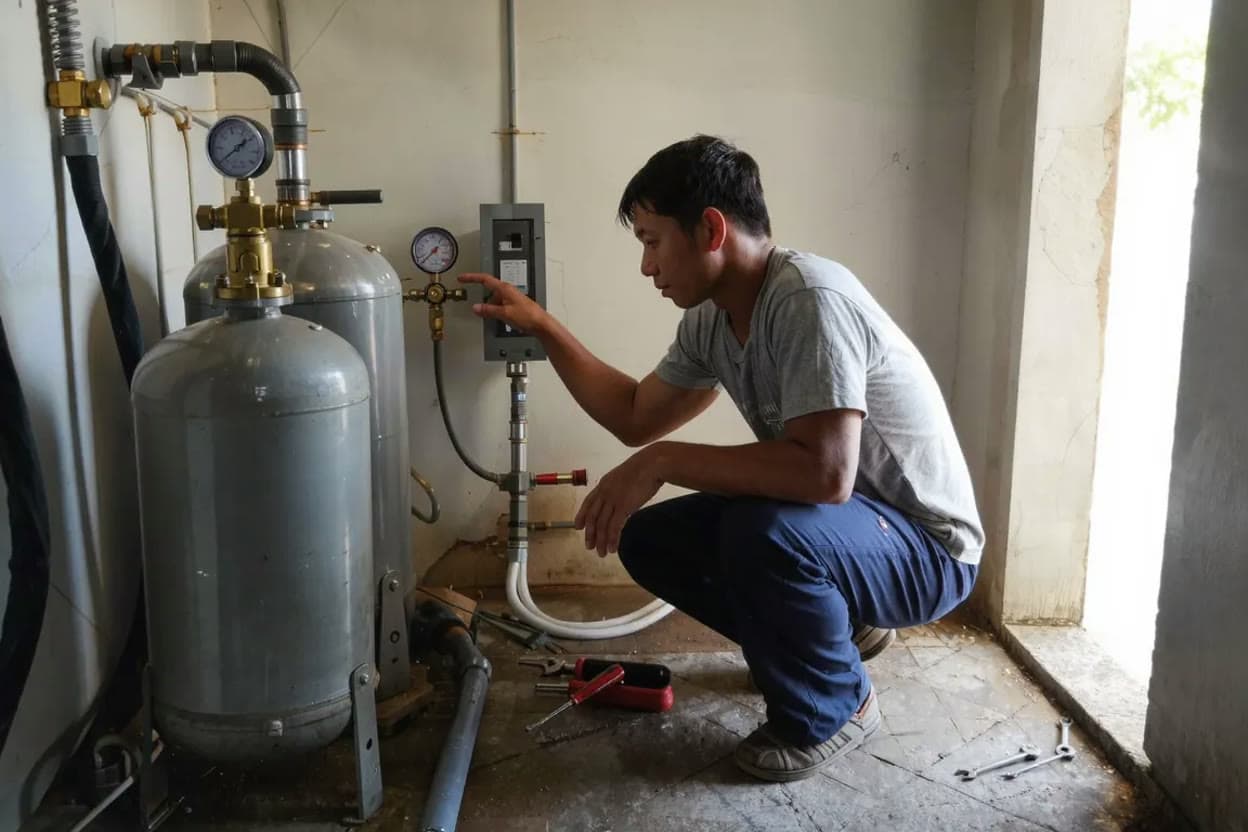
A healthy pump keeps a calm rhythm. A tap opens, pressure falls to a set point, the pump starts, runs for a while, brings the pressure back and stops. Minutes pass between starts. When that rhythm turns into a stutter, on and off every few seconds, the system is short cycling, and it is quietly the most destructive fault a pump can develop.
What normal cycling looks like
A pump is not meant to start every time somebody washes their hands. Between the pump and the house sits a pressure vessel holding a cushion of compressed air above a store of water. Small draws come out of that cushion. The pump only starts when pressure falls to its cut-in point, then runs long enough to refill the vessel to cut-out. Runs of a minute or more, with real rests between them, are the signature of a system doing its job.
What short cycling actually means
Short cycling means the buffer between cut-in and cut-out has effectively disappeared. The pump starts, satisfies the system almost instantly, stops, and is dragged straight back in. Something has shrunk the usable volume of the vessel, confused the switching, or created a demand that never closes. The pump itself is often still healthy at that stage. Left alone, it will not stay that way.
The usual causes, roughly in order of likelihood
- A lost air charge in the pressure vessel. The cushion leaks down slowly in every tank, and a waterlogged one turns every small draw into a pump start. This is the most common cause we find
- A failed bladder. The membrane separating air from water can split, after which the vessel holds almost no usable volume at all. Water at the air valve is the classic sign
- A vessel that was undersized on the day it was installed, so the system has short cycled its whole life
- A pressure switch fault. Contacts wear and differentials drift, and a switch set with too narrow a gap between cut-in and cut-out cycles the pump by definition
- A leak on the pressure side. A dripping toilet fill valve, an irrigation line weeping underground or any joint that bleeds pressure keeps calling the pump back
- A failing check valve letting water fall back toward the well when the pump stops, so pressure drops on its own and the pump restarts with no tap open
- Blocked filtration or a part-closed valve after the vessel, which makes pressure spike to cut-out and collapse just as fast
- Float and controller settings on systems that fill a storage tank first, where a sticking float imitates a pressure fault
- A pump too large for the system, refilling the vessel in seconds
Why cycling wrecks equipment
Starting is the hardest moment in a motor's life. The inrush current at each start heats the windings, wears the contactor and stresses the capacitor, and a submersible motor relies on water moving past it for cooling that never gets established in a three second run. A pump that should start a few thousand times a year can spend that budget in weeks. The electricity bill climbs at the same time, because starts are expensive and short runs move very little water.
Checks a homeowner can safely make
- Time it. Note how long the pump runs and how long it rests. Runs measured in seconds confirm the problem, and the pattern helps the diagnosis
- Close every tap and watch. If the pump still starts with nothing open, water is escaping somewhere: a leak, a running toilet, or a check valve letting go
- Walk the visible pipework and the garden for damp patches, hissing joints or an irrigation zone that never quite shuts
- Check the toilets. A silently running fill valve is the cheapest cause on this list and one of the most common
- Look at the filtration. Gauges before and after the filters, where fitted, show whether a loaded cartridge is choking the flow
Leave the electrical side alone. The pressure switch, the control box and the capacitor all carry mains voltage, and a pump circuit can start on its own at any moment. Checking the vessel's air charge properly also means draining the system down first, which is a technician's job for good reason.
When to call a technician
If the taps-closed test shows the pump starting by itself, if the cycling appeared suddenly, or if the vessel is years old and has never been checked, it is time for a proper look. A technician with a pressure gauge and a multimeter can usually separate a tired vessel from a switch fault from a leak in one visit, and the repair is almost always small next to the pump the diagnosis saves.
Deep Well Samui diagnoses cycling faults across Samui, Phangan and Koh Tao, and fixes the cause rather than the symptom. If a pump has developed a stutter, the sooner it is looked at, the more likely the answer is a small part rather than a new pump.