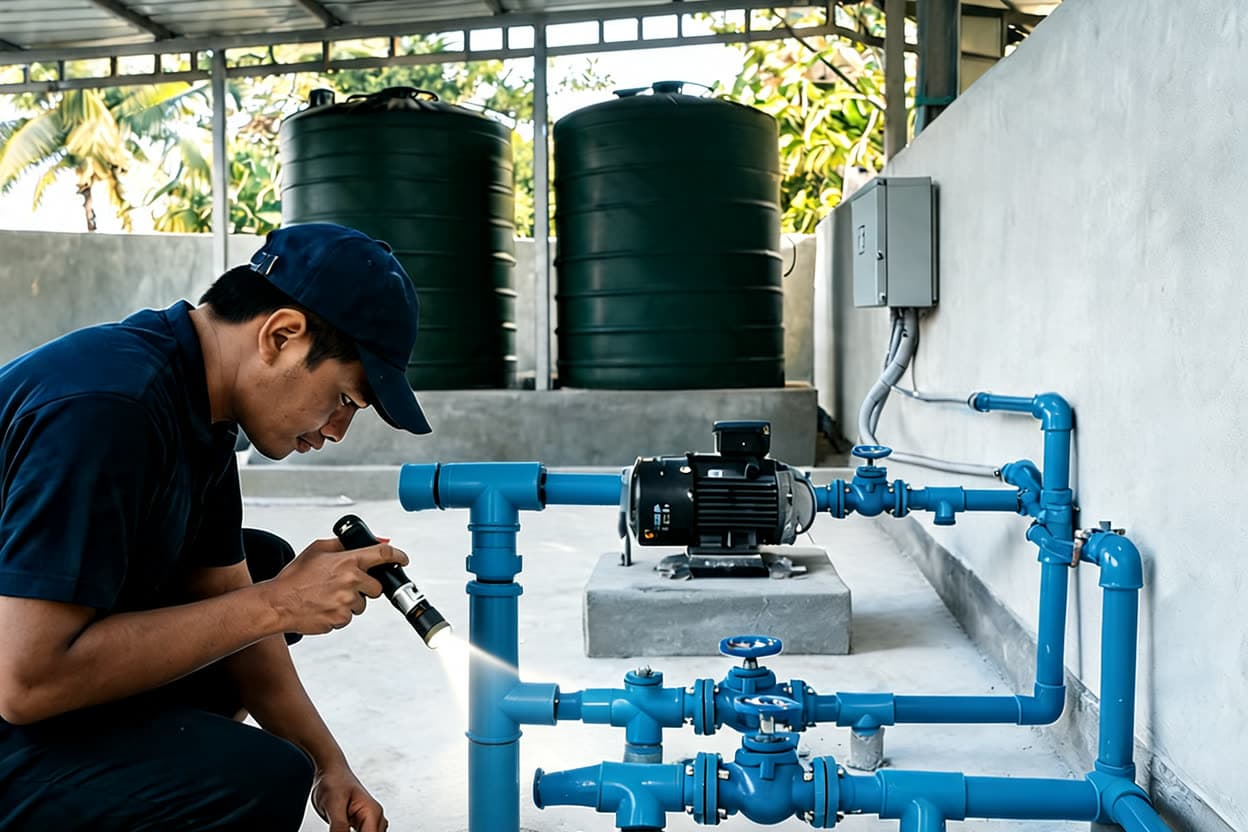
A well can be drilled to depth, cased and test pumped, and the property still not have a reliable water supply. The pump may be set at the wrong depth, the controls may never have been tried under fault conditions, a tank level switch may be wired the wrong way round, or the treatment may be installed but never set up. Commissioning is the stage where someone checks the whole chain, from the well to the tap, and records how it behaves when new. It is also the stage most easily rushed when a build is running late.
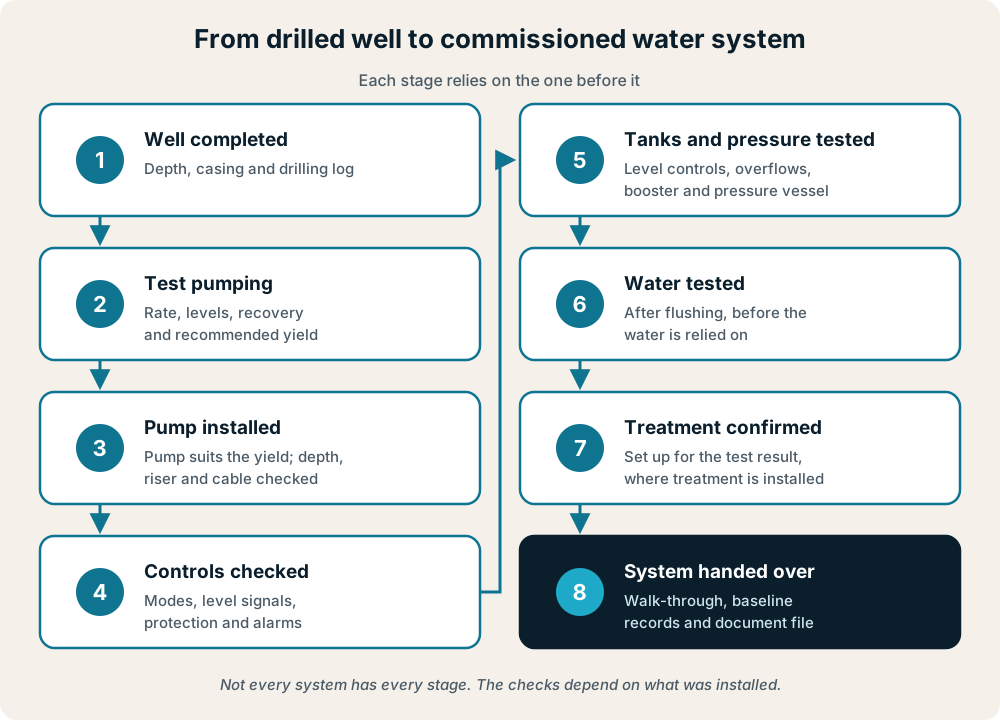
The checks below follow the water's path. The exact list depends on what was installed, and not every system has every part, but the order is worth keeping: each stage relies on the one before.
The well itself
Commissioning starts with the records of what was built: final depth, casing type and depth, screen position where there is one, and the drilling log. Then the test pumping results: the rate the well was tested at, the water levels, the recovery and the operating yield recommended from them. These are not checks in themselves, but every later decision depends on them, and they are much easier to collect while the drilling team is still on the job.
The pump and its installation
The next question is whether the pump suits the well. Its duty should sit within the recommended yield, and its setting depth should make sense against the pumping level and the well's construction. The installation itself deserves a look too: riser pipe joints, the cable and its joints, cable support along the riser, and a safety rope where one is used. All of this is easier to verify before the pump goes down the hole than after.
Controls and protection
With the pump installed, the control panel is checked in each mode. In AUTO the pump should start and stop on the signals it is meant to follow. Protection is checked where it can be done safely, including dry-run or low-level protection, which is easy to wire incorrectly and rarely tested afterwards. Alarms should actually reach someone. This is work for the installer or a qualified electrician, with the owner shown the result rather than doing it.
Storage, levels and pressure
The tank is filled under normal control and the level controls are checked: the well pump should stop when the tank is full and restart when the level falls, and any low-level cut-out on the booster side should protect the booster pump. Overflows and drains should discharge somewhere sensible. On the pressure side, the booster pump, pressure vessel and controls are tried against real use, including several outlets open at once, and the vessel's pre-charge is set for the system.
Flushing, water quality and treatment
New pipework and tanks carry construction debris, and a new well may still bring up some fine sediment at first, so the system is flushed before the water is relied on. Where the well or tanks were opened during construction, disinfection may be part of this stage. A water test then shows what the water actually contains. Treatment, if installed, is set up for that result and checked once it is running. Testing before treatment is chosen avoids buying the wrong equipment.
Leaks and a final walk-through
With everything running, the pipework is checked for leaks under pressure, including buried runs where a pressure test is possible. A pump that restarts briefly with every tap closed is often the first sign of a small leak somewhere. The installer then walks the owner or property manager through the system: where the isolation points are, what the panel indicators mean and what to do if the water stops.
Timing matters on a building site. Systems are often installed months before the house is finished, then used for construction water or left standing. Anything commissioned early is worth checking again just before handover: tanks that have stood with water in them, filters that have handled construction use and controls that other trades may have altered.
Record the baseline
The most valuable output of commissioning is a set of observations from the day the system was new. If the well's output, the pump's behaviour or the water quality changes a year later, the only way to tell what has changed is to compare against how things were. Useful baseline records include the water level at rest and while pumping, how the pump cycles, how long the tank takes to refill and the water test result.
What the owner should keep
Contractors document their work differently, and not every item exists for every system. Where they are available, these are worth keeping together in one file:
- Well depth, casing details and the drilling log
- Test pumping results and the recommended operating yield
- Pump model and the depth it was installed at
- Control panel details and any settings made during commissioning
- Water test results and details of any treatment installed
- Warranties for the pump, tanks and treatment
- Who to call for maintenance and faults
Deep Well Samui drills, installs and commissions complete water systems across Samui, Phangan and Koh Tao, from the borehole to the booster pump, and hands them over with the records the owner will need later. If a new system is about to be handed over to you, we can commission it or review what has already been done.